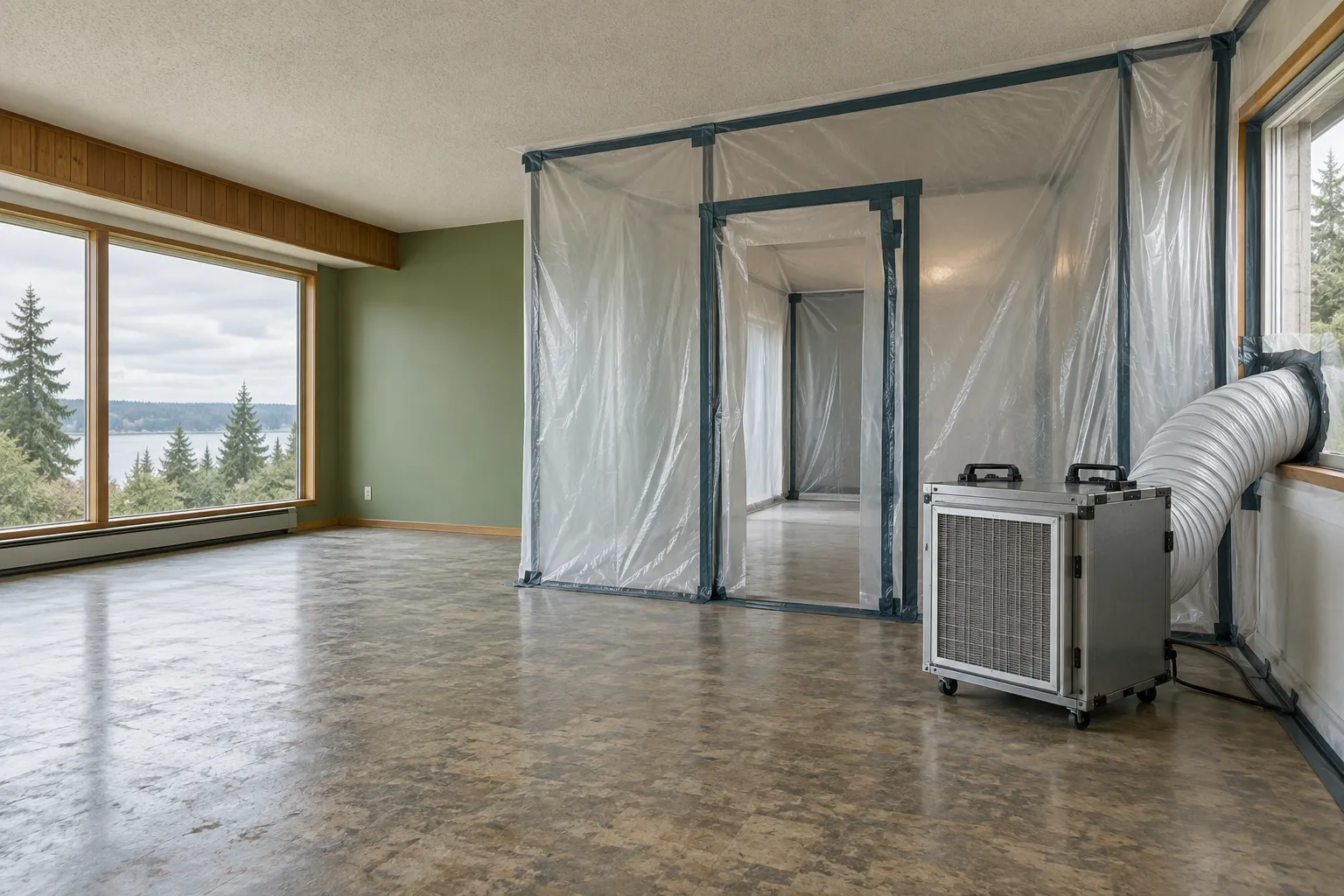
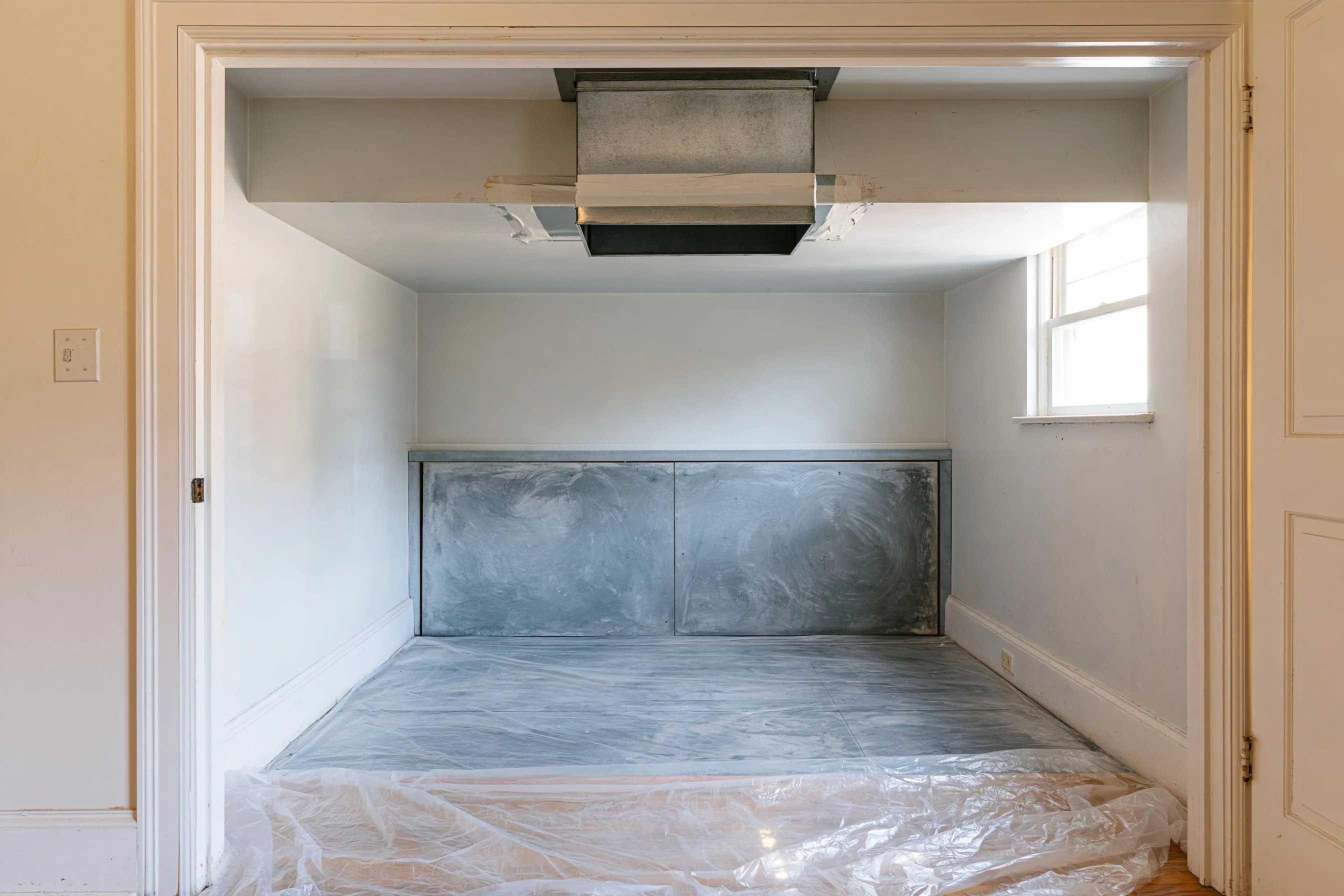
Asbestos removal options
Asbestos popcorn ceiling removal
Before a ceiling gets new lights or a smooth finish, we sample the texture and any paint or patches over it. The results show which ceilings and surfaces we scrape. Repairs and new paint come after us, from your drywall finisher.
Asbestos floor tile and mastic removal
The tile and the black glue under it are different materials, so we test them separately. On a slab, we lift the tile wet and scrape the glue, never grind it. The new tile, plank or carpet that follows goes on your flooring installer's quote.
Asbestos insulation removal
In an older house the suspect material may be tape on a duct collar, board lining a furnace closet or loose fill in the attic. Don't disturb it before it's tested. After that we set up access, shut the heating down for the work and line up whoever puts new insulation in.
Asbestos siding and roofing removal
We take cement shingles off wet and in whole pieces, then wrap them and haul them to an approved landfill. We plan how each bare wall is covered and how our work fits with the crew putting up new siding or a new roof.
Asbestos abatement before renovation and demolition
We work from your plans. A remodel gets a survey of the rooms you're changing, a teardown gets the whole building, and your remodeler or demolition crew hears from us when they can take over.
Commercial asbestos abatement
People keep working in shops, offices and shared buildings while we're there. We work around the affected suites, shared air and access routes, and we confirm which records the owner, the tenants and whoever works next will need.
Plan where the asbestos waste goes
Taylor sits in Williamson County, east of Round Rock. The city's community cleanup days don't take asbestos or construction materials, so old tile, siding or ceiling waste can't go out that way. We bag or wrap it, haul it to a landfill that accepts it and give you the disposal records.
Cement siding is wrapped in whole pieces and ceiling texture goes into sealed bags. At the house, we mark where the work happens and how it fits with the remodel that follows. If the job covers more than one building or a change of use, mention that at the start, since a single-house remodel isn't a guide for it.
What we need from you
Everything the work touches
Give us the whole plan. We want to know which surfaces get cut or removed, what could be hiding behind them and whether a second building is involved. Earlier reports help once we've checked that they cover this work. If the design changes, let us know before the work reaches that part.
Who handles what
When several contractors each have their own agreement, this part matters most. Ahead of any start date we put in plain terms what comes out, where the work area stops and how it sits next to rooms in use and other trades. We also say how we get in, what's off limits and who takes care of notices, waste and repairs.
Records when the job is done
We note what stays in the building and what a later contractor might disturb, so a future remodel starts from an accurate account of this job. You also get the waste paperwork, a visual check and any clearance air test, which each do a different job. Then we tell the next trade the space is theirs.
Match Texas requirements to the building and project
Before we start, describe how the building is used and everything the renovation or demolition will touch. That decides the survey and notice rules, because Texas DSHS separates private homes from public buildings and other facilities, and one home's rules may not apply to a larger project.